Throat exercises for snoring
Throat exercises for snoring tone the back of the airway (soft palate, lateral pharyngeal walls, tongue base) so it stops collapsing during sleep. A natural fix, no mouth guard or strip in the bed.




.webp)
Throat exercises for snoring vs gadgets
Throat exercises for snoring work on the back half of the airway: the soft palate, the lateral pharyngeal walls, and the base of the tongue. Those are the structures that go slack during sleep, narrow the airway, and turn into the vibration your partner hears.
Most people searching this term are done with gadgets. No more nasal strips peeled off in the morning, no chin straps, no mandibular guard to clean, no machine humming next to the bed. They want a natural fix that addresses the cause once, instead of propping the airway open every night. That is exactly what throat exercises target.
The research is real. A randomized trial in Chest found that daily oropharyngeal exercises cut snoring frequency by 36% and total snoring power by 59% over three months in adults with primary snoring (Ieto et al., 2015). A separate trial of app-delivered upper-airway exercises improved partner-reported snoring and sleep quality at 8 to 12 weeks. The catch is consistency, which is exactly what Airway Trainer is built for: a 60-second assessment, then a 6-week plan that sequences throat, palate, and tongue-base drills in the right order so you stop guessing. For the bigger picture, see the snoring exercise app pillar guide or read the soft palate exercise breakdown for the most-cited drills.
*Airway Trainer is a wellness app. It does not diagnose or treat disease. Consult a healthcare provider for diagnosed sleep apnea or persistent symptoms.
The back-of-airway drills, in plain English
Soft-palate lifts. Tongue-base extensions. Pharyngeal isometric holds. Controlled vowel sounds that engage the upper throat. These are the drills that train the structures most likely to collapse during sleep, and they are the ones used in the published snoring trials.
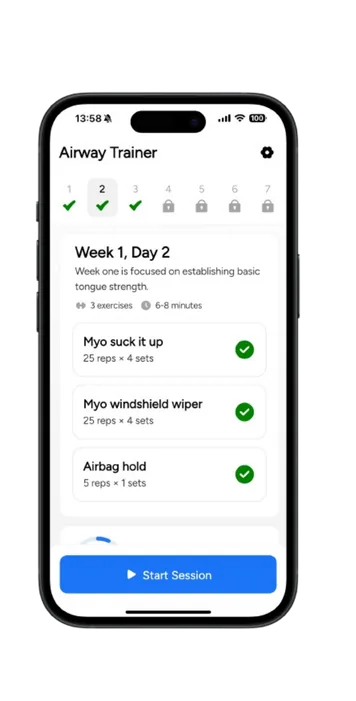
Each exercise inside the app is demonstrated step by step with rep counts, hold times, and form cues so the right muscles fire on every rep.

Follow a real progression instead of random tips
The people searching this keyword are usually past the curiosity stage. They want a routine they can follow every day without guessing whether today should be tongue slides, throat holds, palate drills, or all three. Airway Trainer handles that with a structured 6-week plan that sequences the work for you.
You open the app, complete the session, and move on. No memorizing. No PDFs. No trying to build your own therapy program from scattered advice.
Build a routine your partner will notice
Snoring searches are often urgent because someone else in the bed is losing sleep too. That changes what matters: not theory, but whether you can stay consistent long enough to give the exercises a real chance to work.
Airway Trainer is built for that kind of adherence. Sessions are short, guided, and easy to repeat before bed or whenever your routine allows. The goal is simple: make throat exercises feel doable enough to become daily.
What ENT surgeons train (and what they avoid)
London ENT surgeon Vik Veer ran an experiment most listicles skip: he put a flexible scope up his own nose and watched his throat while doing the standard snoring drills. The argument he came away with reshapes how to think about a routine. Train the muscles that open the airway - tongue protrusion + depression, palate lift, palate pull-forward - and be cautious about muscles that close it.
That second list matters because some "throat drills" do the opposite of what you want. Pulling the tongue backward narrowed his airway on camera. Sustained low-pitched growls and screaming-style vocals collapsed the lateral throat walls - the same vibration heavy- metal singers train on purpose. A bright, tense high-pitched "EEE" with the neck and throat engaged was the move that dilated the airway in the same recording.
Airway Trainer's sequencing is built on this distinction: the drills you see in your daily session are the ones that opened the airway in clinical observation, not the ones that sound impressive in a YouTube short.
Everything you need in one app
Related articles
Throat exercises for snoring FAQs
Do throat exercises for snoring actually work?
How long do throat exercises for snoring take each day?
How soon can you notice results from throat exercises for snoring?
What muscles do throat exercises for snoring target?
Are throat exercises for snoring the same as myofunctional therapy?
Can throat exercises replace CPAP or other sleep apnea treatment?
Should I do every drill or only the ones for my collapse pattern?
Why does pitch matter when I do the vowel drill?
If you are looking for throat exercises for snoring, start with a guided program instead of piecing it together yourself. Download Airway Trainer and begin free.