Science
Why snoring exercises work
A plain-English look at what causes snoring, why airway exercises can help, and what changes people often notice first.
01
Why snoring happens
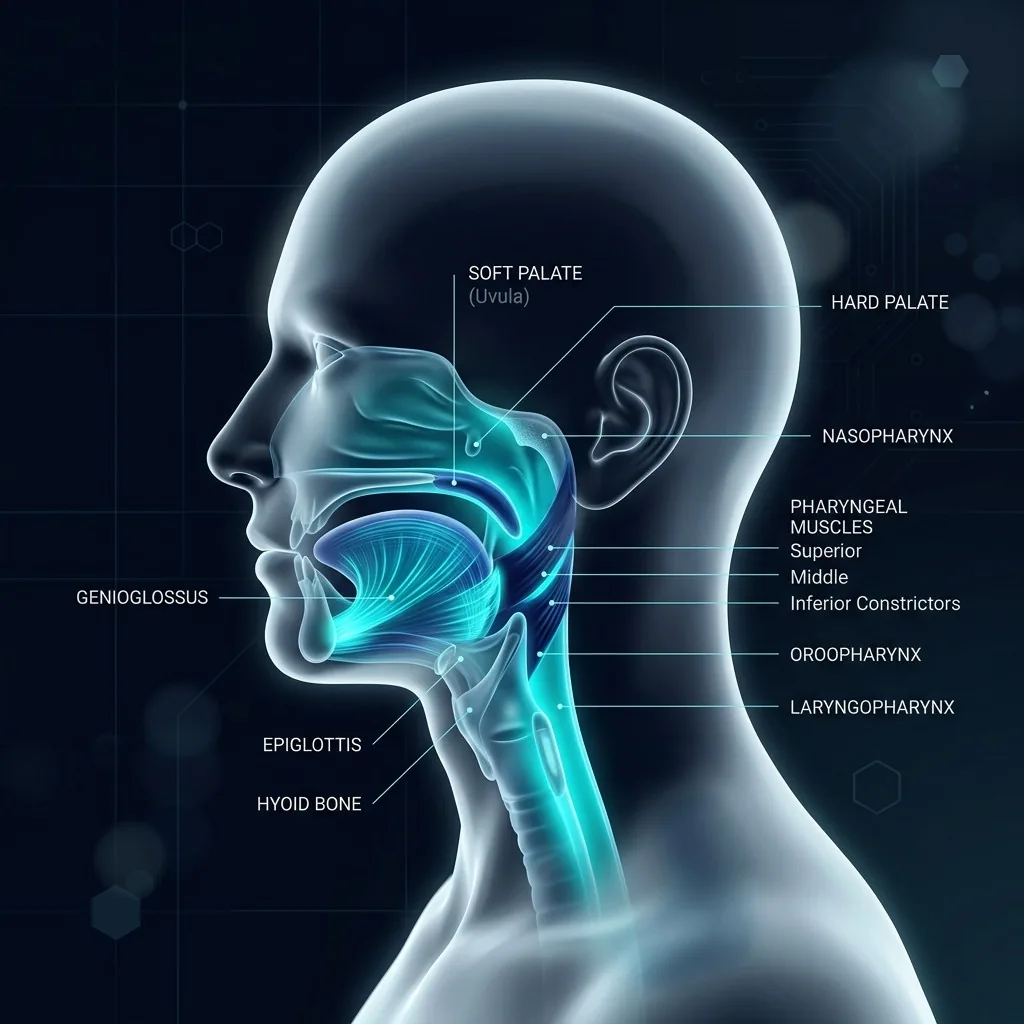
Snoring usually starts when the muscles around the airway relax too much during sleep. That includes the tongue, the soft palate, and the throat tissues that are supposed to help keep the passage open.
When those tissues lose tone, the airway gets narrower. Air still tries to move through, but now it has to squeeze past softer tissue with less support.
That moving air makes the surrounding tissue vibrate. The vibration is what you hear as snoring. In more severe cases, the airway can narrow enough to create repeated breathing disruptions during the night.
02
Why throat, tongue, and jaw exercises can help
The logic behind these exercises is straightforward. If weak airway muscles contribute to collapse and vibration, improving tone and control can make the airway more stable during sleep.
Throat exercises target the tissues that are prone to fluttering. Tongue exercises improve posture and reduce the chance of the tongue falling backward. Jaw exercises support better oral posture and can help create a more open breathing pattern overall.
That does not mean every snorer has the same cause. It means muscle tone is one of the few root-level factors you can train directly, without equipment or invasive intervention.
03
Why this approach feels different from masks, strips, and gadgets
Most anti-snoring products try to manage the symptom for a single night. Exercises are different because they try to change the condition of the tissue itself.
That makes the approach appealing to people who want something natural, low-friction, and sustainable. There is nothing to strap on before bed. No hardware. No nightly setup. Just a short daily routine that builds over time.
The tradeoff is consistency. This is more like training than a quick fix. The value comes from repetition, not from a single use.
04
What the exercises are actually training
A good program is not just random mouth movements. It trains strength, coordination, posture, and awareness in the areas that influence breathing mechanics.
Some exercises focus on the soft palate and upper throat to reduce collapse. Others improve tongue mobility and resting position. Others work on jaw control so the mouth is more likely to stay in a healthier position during sleep.
That matters because airway stability is not created by a single muscle. It is the result of several structures working together more reliably.

05
What people often notice first
The earliest changes are usually not dramatic before-and-after transformations. More often, people notice quieter nights, fewer complaints from a partner, and a feeling that breathing is less strained during sleep.
Over time, some people also report deeper sleep, better morning energy, and fewer disruptions in the night. The timeline varies, but the pattern is usually progressive rather than instant.
That is why expectations matter. The point is not to promise perfection overnight. The point is to make the airway more resilient with a routine that is easy enough to keep doing.

The short version
- Snoring often starts when airway tissues lose support and begin vibrating during sleep.
- Exercises target muscle tone in the throat, tongue, and jaw rather than just masking symptoms.
- The benefit comes from consistency and repetition, not one-time use.
- This approach is most compelling when you want a natural routine you can realistically stick with.
Related guides
Next step
Ready to try a guided routine?
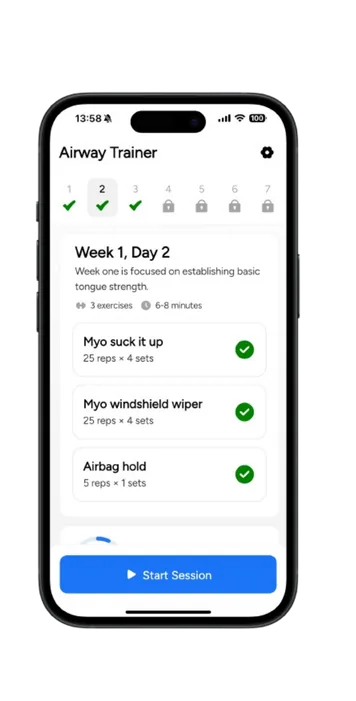
Airway Trainer turns these exercises into a short daily program with structure, pacing, and enough guidance to stay consistent.