Genio for sleep apnea
A second U.S. hypoglossal nerve stimulator is now in commercial play - bilateral under-chin implant, external nightly power, DREAM pivotal numbers, and fresh ACCCESS data aimed at complete concentric collapse. Here is what Genio is, how it differs from Inspire, and what still matters for residual snoring.


Quick answer
Genio is an FDA-approved (August 2025) bilateral hypoglossal nerve stimulator for selected adults with moderate-to-severe OSA who cannot use PAP well. A small leadless implant under the chin stimulates both hypoglossal nerves so the tongue moves forward during sleep. Power comes from an external activation chip on a disposable under-chin patch each night, so there is no chest battery to replace on a decade cycle.
DREAM pivotal summaries report roughly a 63.5% AHI responder rate, 71.3% ODI responder rate, about a 70.8% median AHI reduction, and ~82% of participants at AHI below 15. In October 2026, ACCCESS 12-month data in complete concentric collapse showed 77.2% AHI and 87.7% ODI responder rates with a PMA supplement filed for expanded U.S. indication. Genio is still surgery plus candidacy rules - not a mail-order snore gadget - and residual vibration can remain after AHI improves.
How Genio opens the airway
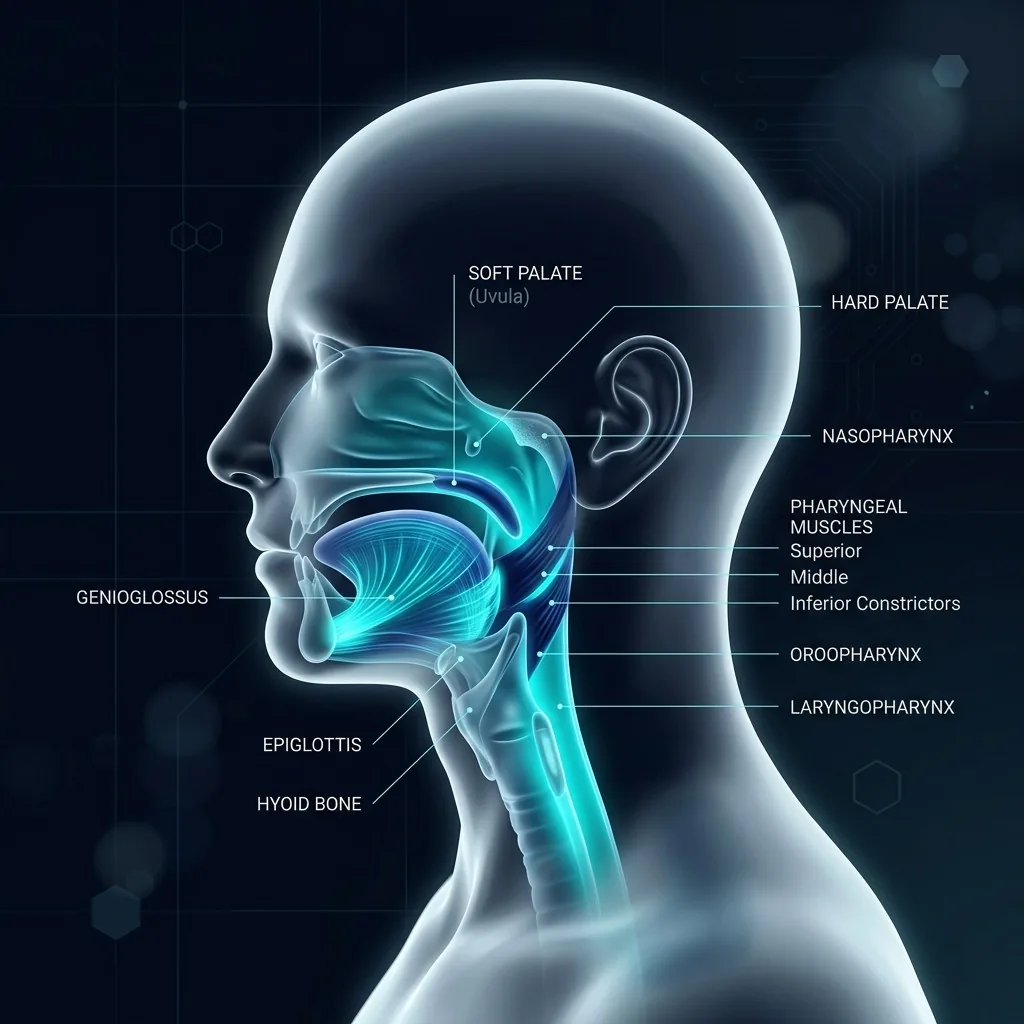
Obstructive sleep apnea is repeated upper-airway narrowing or collapse during sleep. When the tongue base falls backward, air cannot pass. Hypoglossal nerve stimulation (HGNS) is the electrical version of "pull the tongue forward": the nerve that drives tongue protrusion gets timed pulses so the airway stays more open without a CPAP mask.
Genio is Nyxoah's bilateral, leadless take on that idea. UCLA sleep surgeon Eric Kezirian - among the early West Coast implanters - describes a single ~6 cm under-chin incision, an implant that unfolds under the skin over both nerves, and a nighttime adhesive patch plus activation chip patients control with a phone app. Activation typically waits for healing (on the order of weeks), then titration. Named centers such as Henry Ford Health have also publicized early commercial implants for CPAP-intolerant patients.
Tongue-base collapse is the electrical target
Forward tongue motion opens the pathBoth Genio and older unilateral systems stimulate branches of the hypoglossal nerve so the tongue moves forward during sleep. That opens space behind the tongue base. Sleep surgeons still screen collapse patterns (often with drug-induced sleep endoscopy) because pure soft-palate or multi-level collapse may need a different plan.
Bilateral paddles under the chin
One implant, both nervesGenio places a small leadless stimulator through a single under-chin incision with electrode paddles over both hypoglossal nerves. Clinicians highlight symmetric forward pull rather than a unilateral cuff plus long chest lead. That design choice drives much of the Genio vs Inspire comparison patients hear in consults.
Power lives outside the body
Nightly wearable, no implanted battery swapA disposable adhesive patch under the chin holds an external activation chip that powers the implant wirelessly while you sleep. Upside: no scheduled surgery every decade to replace an implanted battery. Trade-offs: nightly patch routine, beard-free skin under the chin, and rare adhesive irritation (clinics often patch-test before surgery).
Tone and snoring can still remain
Implant is not a universal snore eraserHGNS treats collapse by moving the tongue. Soft-palate flutter, nasal blockage, alcohol, back sleep, and weak airway muscle tone can still leave residual vibration. ENT explainers stress residual snoring plans even after good AHI responses. Airway muscle training targets that residual mechanical load when a clinician says exercise is appropriate.
What DREAM and ACCCESS showed
Two evidence layers matter for patients reading 2025-2026 headlines. First, the DREAM IDE pivotal program that supported FDA approval. Second, the ACCCESS U.S. pivotal program in complete concentric collapse, presented with full 12-month data at ISSS in October 2026.
| Program | Population focus | Headline outcomes (summaries) |
|---|---|---|
| DREAM (FDA basis) | Moderate-to-severe OSA; PAP intolerance pathway | AHI responder ~63.5%; ODI responder ~71.3%; median AHI cut ~70.8%; ~82% AHI <15 (AASM / UCLA paraphrases of trial) |
| ACCCESS 12-mo (ISSS 2026) | Moderate-to-severe OSA with soft-palate CCC | AHI responder 77.2% (Sher); ODI responder 87.7%; PP mean AHI 33.6 to 10.4 (median -74.3%); 0 device/procedure-related SAEs; PMA supplement filed |
Numbers above are educational paraphrases of AASM, UCLA Health, and Nyxoah primary releases. Responder definitions, full analysis vs per-protocol sets, confidence intervals, and adverse-event tables belong in the Journal of Clinical Sleep Medicine DREAM paper and the formal ACCCESS clinical study report - not in a blog table alone.
Context from the broader treatment map: our 2026 treatment landscape page still owns the multi-option overview (PAP alternatives, Inspire lane, pills, and training). This page is the dedicated Genio owner so the branded implant query and CCC news cycle have a single deep URL.
Genio vs Inspire in plain English
Patients often meet both brands in the same consult. ENT explainers (including NHS sleep surgeon Vik Veer and U.S. sleep surgeon Jordan Weiner) stress that both can work well for tongue-base phenotypes - and that hardware lifestyle differs.
| Topic | Genio (Nyxoah) | Inspire (typical) |
|---|---|---|
| Implant layout | Leadless stimulator under chin; bilateral paddles | Chest impulse generator + neck stimulation lead (and sensing pathway) |
| Incisions | Usually one under-chin incision | Usually chest + neck (model-dependent placement) |
| Nightly routine | Adhesive patch + external activation chip; app control | Fully internal once healed; remote/app on/off (no chin patch) |
| Battery future | No implanted battery replacement surgery on a ~10-year cycle | Implanted battery replaced surgically about every decade |
| Real-world volume | Newer U.S. commercial path (FDA 2025); fewer long-term implants than Inspire historically | Longer U.S. track record and larger implant counts |
Comparison points are educational summaries of clinician videos and center materials, not a head-to-head randomized trial. Individual candidacy, insurance criteria, and surgeon experience dominate the choice.
Who these results apply to
Who Genio labeling and trials typically aim at
- Adults with moderate-to-severe OSA in the approved AHI band (AASM summary: AHI 15-65 for the initial U.S. indication)
- People who failed, refused, or cannot tolerate PAP (CPAP/BiPAP)
- Candidates cleared after sleep-surgery evaluation (often including DISE and medical fitness for outpatient implant)
- Patients who can commit to a nightly external wearable and follow-up titration
Who may need a different path (or wait on expanded labeling)
- Primary snoring without documented OSA, or mild OSA outside labeled criteria
- Collapse patterns or medical exclusions your surgeon flags as poor HGNS fit
- Complete concentric collapse (CCC) of the soft palate: historically a barrier for unilateral HGNS in the U.S.; ACCCESS 12-month data and a PMA supplement (Oct 2026) target that gap, but expanded commercial indication depends on FDA review
- Anyone expecting a weekend fix without diagnosis, implant candidacy workup, or post-op activation/titration
See a clinician first if...
- Gasping, choking, witnessed pauses, or severe daytime sleepiness
- You are already on CPAP, an oral appliance, oxygen, or prior upper-airway surgery and want to change therapy
- You cannot shave the under-chin skin or have known severe adhesive allergies
- Unexplained weight loss, chest pain, or other red-flag symptoms unrelated to elective implant planning
Practical next steps
Treat headlines as a consult prompt, not a self-referral form
U.S. commercial availability after August 2025 FDA approval does not mean every snorer qualifies. Start with a sleep diagnosis, then a sleep-surgery or ENT evaluation that maps collapse pattern and medical fitness.
Ask specifically about Genio vs Inspire trade-offs
Common consult points: single under-chin scar vs chest-plus-neck hardware, bilateral vs unilateral stimulation, external nightly patch vs fully implanted battery with remote, MRI compatibility notes, and long-term data volume (Inspire has far more real-world implants historically).
Plan for activation delay and titration
Centers describe healing time before activation (often on the order of weeks, not the next morning). Stimulation intensity is titrated so the tongue opens the airway without waking you. Expect follow-up sleep testing or downloads as the team dials settings.
Keep a residual-snoring stack
Even with a strong AHI response, soft-palate vibration, nasal blockage, alcohol timing, back sleep, and weak tone can keep nights loud. Positional habits, nasal care, prescribed PAP/oral appliances when still indicated, and oropharyngeal training cover different residual pieces.
This page is educational, not surgical advice. Hypoglossal nerve stimulation requires a licensed care team, candidacy testing, informed consent, and a plan for what happens to CPAP or oral appliances after activation. Do not stop prescribed therapy because a device headline looks encouraging.
Expert videos on Genio and HGNS
Clinician framing and demonstration context only. Clinical claims on this page are grounded in the Sources list, not in video captions. Prefer named ENT/sleep surgeons over pure manufacturer ads when learning mechanism trade-offs.
Vik Veer, NHS ENT surgeon - side-by-side hardware: chest battery vs under-chin chip, unilateral cuff vs bilateral paddles, breathing sync, MRI notes, and lifestyle trade-offs patients actually ask about.
Vik Veer, NHS ENT surgeon - mechanism under the chin, nightly external power patch, early evidence framing, and practical issues (adhesive, beard, wireless distance).
Vik Veer, NHS ENT surgeon - expectations check: what "cure" language gets wrong, how snoring can remain, and how Genio sits beside Inspire in a modern implant series.
Dr. Jordan Weiner (ENT / sleep surgery) - U.S. clinic comparison of Inspire V vs Genio: incision patterns, external chip weight, insurance notes, recovery, and why experience volume still differs.
Henry Ford Health / WXYZ local news - early U.S. commercial patient story: CPAP intolerance, single under-chin implant, external patch power, and OR check that the tongue advances on stimulation.
When airway exercises still help
Hypoglossal implants move the tongue electrically. They do not automatically teach the soft palate and pharyngeal walls to hold tone every night for the rest of your life. If vibration remains after activation - or while you wait through candidacy and healing - oropharyngeal training is the residual mechanical lever when a clinician says it is appropriate.
Randomized trials of oropharyngeal programs reduced snoring metrics (Ieto 2015) and improved OSA outcomes versus sham (Guimaraes 2009). A myofunctional therapy meta-analysis (Camacho 2015) found pooled reductions in snoring and apnea-hypopnea index in selected populations. Those results support a daily airway routine as an adjunct - not as a substitute for OSA diagnosis, PAP when indicated, or surgical implant pathways.
ENT education often notes that tongue-forward training shares a direction with HGNS design. A practical stack for many people exploring implants or living with residual snoring: STOP-BANG screen, sleep testing when scores or symptoms warrant it, prescribed PAP or oral appliance adherence until a surgeon restudies you, side-sleep habits, alcohol timing, and a guided tongue/palate/throat routine. Related guides: tongue exercises, soft-palate drills, and oropharyngeal exercise studies.
Airway Trainer turns those drills into a short daily session so residual vibration work is not only willpower and random YouTube tabs while implant candidacy or titration runs in parallel.
When to see a doctor first
A news cycle about a new implant is not a care plan. Get evaluated - do not only screenshot a trial table - if you have:
- Gasping, choking, witnessed pauses, or severe daytime sleepiness
- Drowsy driving or work impairment from sleepiness
- Existing CPAP, oral appliance, oxygen, or prior airway surgery you want to change
- Interest in HGNS: you need formal candidacy testing, not a product page alone
CPAP, oral appliances, hypoglossal nerve stimulation (Inspire or Genio when you qualify), positional therapy, nasal surgery, weight management, and airway exercises each solve different pieces. Match the tool to the cause after a real assessment.
Sources
- American Academy of Sleep Medicine. Nyxoah receives FDA approval for Genio system. August 15, 2025 (FDA approval announced August 8, 2025).
AASM industry note summarizing U.S. FDA approval of the Genio hypoglossal nerve stimulation system for a subset of adults with moderate-to-severe OSA (AHI 15-65) who fail, refuse, or cannot tolerate PAP. Notes bilateral stimulation, leadless battery-free implant, external wearable power, and DREAM trial support (AHI responder 63.5%, ODI responder 71.3%, median AHI reduction 70.8%, 82% achieving AHI below 15). - UCLA Health. A new sleep apnea treatment that offers an alternative to CPAP. Eric Kezirian, MD. Clinical explainer on early West Coast Genio implants and DREAM trial context.
Named sleep-surgery center patient-facing overview: single under-chin incision, bilateral hypoglossal stimulation, external adhesive patch plus activation chip, DISE candidacy framing for tongue-base collapse, and Kezirian coauthorship on DREAM results published in the Journal of Clinical Sleep Medicine. Notes consultant relationship with Nyxoah. - Nyxoah SA. Full 12-month data from the ACCCESS U.S. pivotal study in complete concentric collapse patients presented at ISSS 2026. GlobeNewswire, October 15, 2026.
Company primary release of ACCCESS U.S. pivotal 12-month results in OSA with complete concentric collapse (CCC) of the soft palate: AHI responder rate 77.2% (Sher criteria) and ODI responder rate 87.7% (full analysis set, both p<0.001); per-protocol mean AHI 33.6 to 10.4 (median 74.3% reduction); no device- or procedure-related serious adverse events through 12 months; PMA supplement submitted to expand U.S. indication to CCC. CCC remains without a commercially available unilateral HGNS option in the U.S. under current labeling constraints described in the release. - Woodson BT, et al. / DREAM investigators. Dual-sided hypoglossal nerve stimulation for obstructive sleep apnea (DREAM). J Clin Sleep Med. doi: 10.5664/jcsm.11822.
Peer-reviewed DREAM pivotal trial report supporting Genio safety and efficacy in moderate-to-severe OSA. Use the journal article for full inclusion criteria, estimands, adverse events, and responder definitions rather than press paraphrases alone. - Mayo Clinic. Obstructive sleep apnea: Diagnosis and treatment.
Patient-facing overview of OSA evaluation and standard options (CPAP, oral appliances, lifestyle, surgery) and why device choice depends on phenotype, tolerance, and clinician assessment. - Mayo Clinic. Snoring: Diagnosis and treatment.
Clinical snoring overview: when snoring warrants apnea evaluation, and that anatomy and muscle tone still matter after any device or lifestyle change. - Ieto V, et al. Chest. 2015 Sep;148(3):683-691. PMID: 25950418.
Randomized trial: oropharyngeal (airway) exercises reduced snoring frequency and snoring power in habitual snorers - a non-implant path when residual vibration or mild tone problems remain. - Guimaraes KC, et al. Am J Respir Crit Care Med. 2009 May 15;179(10):962-968. PMID: 19234106.
Randomized trial: daily upper-airway exercises improved obstructive sleep apnea severity and snoring versus sham control. - Camacho M, et al. Sleep. 2015 May 1;38(5):669-675. PMID: 25348130.
Meta-analysis of myofunctional therapy for OSA: pooled trials show meaningful reductions in snoring and apnea-hypopnea index in selected populations.
Genio and sleep apnea: FAQs
What is the Genio system for sleep apnea?
Genio (Nyxoah) is a hypoglossal nerve stimulation system for selected adults with moderate-to-severe obstructive sleep apnea who cannot use PAP successfully. A small leadless implant under the chin stimulates both hypoglossal nerves so the tongue moves forward during sleep. Power and control come from an external wearable on an adhesive under-chin patch, not from a battery buried in the chest.
Is Genio FDA approved in the United States?
Yes. Nyxoah announced FDA approval on August 8, 2025 for a subset of adults with moderate-to-severe OSA (AHI 15-65 in the AASM summary) who fail, refuse, or cannot tolerate PAP. Approval rested on the DREAM pivotal program. Expanded labeling for complete concentric collapse is a separate regulatory path; Nyxoah reported submitting a PMA supplement after ACCCESS 12-month data in October 2026.
How does Genio differ from Inspire?
Both open the airway by moving the tongue via hypoglossal stimulation. Inspire is a fully implanted system with a chest impulse generator, sensing/stimulation leads, and a remote (battery replacement surgery roughly every decade). Genio uses a single under-chin leadless implant with bilateral paddles and an external activation chip on a nightly adhesive patch, so there is no implanted battery to replace on that schedule. Surgeons also discuss differences in breathing synchronization, MRI notes, scar pattern, and real-world experience volume. Neither is automatically "better" for every anatomy.
What did the DREAM trial show?
Per AASM and UCLA Health summaries of DREAM: the study met primary end points with an AHI responder rate around 63.5% and an ODI responder rate around 71.3%, a median AHI reduction near 70.8%, and about 82% of participants reaching AHI below 15. Position-specific analyses were highlighted as showing benefit including during supine sleep. Read the Journal of Clinical Sleep Medicine paper for full methods, safety, and estimands.
What is ACCCESS and complete concentric collapse (CCC)?
CCC is a soft-palate collapse pattern that has historically contraindicated unilateral hypoglossal nerve stimulation in the United States. ACCCESS is Nyxoah's U.S. pivotal study of Genio in CCC patients. At ISSS 2026 (October 15, 2026 release), 12-month co-primary responder rates were 77.2% (AHI, Sher) and 87.7% (ODI) on the full analysis set, with a per-protocol median AHI reduction of 74.3% and no device- or procedure-related serious adverse events through 12 months. A PMA supplement was submitted to seek expanded U.S. indication. Until FDA acts, treat commercial access for CCC as regulatory-in-progress, not guaranteed.
Does Genio cure snoring?
No implant is framed as a universal snore cure. Trials target breathing-event rates and related symptoms in selected OSA. Residual soft-palate flutter, nasal issues, alcohol, position, and weak muscle tone can still produce sound after AHI improves. Ask your team what residual snoring plan they use after activation.
Can airway exercises help if I am considering or recovering from HGNS?
Exercises do not replace implant candidacy workups or prescribed OSA therapy. Randomized oropharyngeal programs (Ieto 2015, Guimaraes 2009) and a myofunctional therapy meta-analysis (Camacho 2015) support lower snoring load and, in selected groups, better AHI as an adjunct. ENT education often notes that tongue-forward training shares a mechanical direction with hypoglossal stimulation. Use exercises only when your clinician says they fit your stage of care.
Implants move the tongue. Tone still needs reps.
Follow clinician-led OSA and surgical care when you qualify for HGNS. Airway Trainer handles the daily tongue, palate, and throat work that lowers residual snoring vibration - the piece an implant cannot train for you.
Related reading: New sleep apnea treatments 2026 · Retatrutide for sleep apnea · CPAP 4-hour rule