Snoring and vascular aging
Heavy snoring is not only a partner problem. A 2026 multi-country study of nearly 30,000 people linked snoring burden to stiffer arteries - even in people without sleep apnea. Here is what the data showed, how clinicians talk about snoring and the heart, and what to do next.


Quick answer
Yes - heavy snoring is associated with faster vascular aging signals, and it is not only an OSA story. Pinilla and colleagues (npj Digital Medicine, 2026) analyzed multi-night home data from 29,653 adults across 20 countries. Higher obstructive sleep apnea severity tracked with higher pulse wave velocity (PWV), a marker of arterial stiffness. Separately, higher snoring burden predicted higher PWV across every OSA band, including people classified as no OSA.
The headline comparison often repeated in coverage: people with no OSA but high snoring burden (about 12% of the night snoring in the no-OSA contrast) had predicted PWV levels similar to severe OSA with minimal snoring. That is observational association from connected devices - not a death sentence, and not proof that tape or a pillow "de-ages" arteries. It is strong enough to retire the joke that snoring is only a relationship annoyance.
If you gasp, choke, or score high on STOP-BANG, get evaluated for OSA. If you "only" snore heavily, still treat snoring burden as a health signal worth measuring and reducing - not a cosmetic habit to ignore.
What the 2026 Flinders / Withings study found
Researchers at Flinders University (Adelaide Institute for Sleep Health) used long-running home data: an under-mattress sensor for nightly OSA severity and snoring, paired with a smart scale that estimates aortic-leg pulse wave velocity. The published cohort covered roughly four years of use among 29,653 adults (mean age about 52; mostly male; mean BMI about 27) living in 20 countries.
Versus no OSA, mild, moderate, and severe OSA were each linked with higher PWV in a dose-response pattern after adjusting for age, sex, and BMI. Night-to-night variability mattered too: mild OSA with high variability looked more like severe OSA on the vascular marker than a single-night mild label would suggest.
The snoring finding is the part most primary snorers need. The interaction between OSA category and snoring burden was not significant. Higher percent of time snoring (roughly 90th versus 10th percentiles within each band) stayed associated with elevated PWV in no, mild, moderate, and severe OSA groups. Example contrasts reported in the paper include about +0.11 m/s in the no-OSA band and +0.14 m/s in the severe band for high versus low snoring burden (95% CIs exclude zero in those contrasts).
Limitations are honest and important: this is real-world digital monitoring, not a randomized trial of snoring treatment; device users are not a random sample of every adult; PWV is a risk marker, not a heart attack itself; and the paper does not claim every snore is equally harmful. Still, for patient-facing education it is one of the clearest large datasets arguing that snoring burden belongs in the cardiovascular conversation, not only the bedroom comedy reel.
How snoring and apnea stress the heart and vessels
Snoring is vibrating soft tissue in a narrowed airway. Obstructive sleep apnea adds repeated collapse, oxygen desaturation, and micro-arousals. Cardiology and sleep clinics describe the shared physiology: surges in sympathetic drive, blood-pressure spikes that blunt the normal nighttime BP dip, inflammation and oxidative stress on vessel walls, and higher odds of hypertension, atrial fibrillation, coronary disease, heart failure, and stroke when OSA is untreated.
Hospital educators often say patients dismiss the sound as "just snoring" until a partner forces a sleep study - then cardiac risk is already in play. That framing matches Mayo Clinic and American Heart Association patient pages: loud snoring is a common OSA clue, and untreated OSA is a heart-health problem, not a personality quirk.
Primary snoring without frank apneas can still mean high mechanical vibration, partial obstruction, and fragmented sleep. The 2026 PWV data put a vascular number on that "noisy but not apnea" zone. It does not replace OSA diagnosis when apneas are present.
Independent PWV signal
Nightly vibration load (snoring burden)
In the 2026 Flinders/Withings cohort, people who spent more of the night snoring had stiffer arteries (higher pulse wave velocity) even after researchers accounted for OSA severity category, age, sex, and BMI. Snoring was not treated as pure noise.
Dose-response with stiffness
Obstructive sleep apnea severity
Mild, moderate, and severe OSA tracked with stepwise higher PWV versus no OSA. That matches the broader heart-risk story hospitals teach: repeated airway collapse, oxygen dips, and arousals stress the cardiovascular system over years.
Single-night tests can miss it
Night-to-night variability
The same paper argues multi-night home measures capture fluctuating OSA better than one lab night. Mild OSA with high night-to-night swings looked more like severe OSA on vascular markers. That is why "my sleep study was borderline" is not always the full story.
Not automatically harmless
Primary snoring without diagnosed apnea
Participants with no OSA but high snoring burden had predicted PWV levels similar to people with severe OSA and little snoring. That does not prove every quiet-apnea-negative snorer has the same risk - it does kill the "if it is not apnea, ignore it" shortcut.
Who should take snoring and vascular aging seriously
Why this page matters if you "just snore"
- Loud, frequent snoring most nights with or without a formal OSA diagnosis
- Partners report long stretches of noise even when breathing seems continuous
- You were told primary snoring is cosmetic and not covered or not worth treating
- You already manage blood pressure, AFib risk, or family heart history
Where vascular-risk messaging is strongest
- Suspected or confirmed OSA (especially moderate-to-severe)
- Resistant hypertension, atrial fibrillation, heart failure, or prior stroke/TIA discussions
- High STOP-BANG score, large neck, obesity, or witnessed apneas
- Multi-night snore apps or under-mattress sensors showing high snore percent
See a clinician first if...
- Gasping, choking, or witnessed pauses in breathing
- Severe daytime sleepiness, falling asleep while driving, or work impairment
- Morning headaches, resistant high blood pressure, or known heart disease
- Chest pain at night or new irregular heartbeat symptoms
Practical next steps if you snore and worry about heart risk
Screen, do not self-diagnose from one study headline
Use a structured screen such as STOP-BANG, talk with a clinician, and pursue sleep testing when red flags are present. Large observational cohorts show associations; they do not replace diagnosis or treatment decisions for you personally.
Treat snoring burden as a measurable habit, not a joke
Track snore minutes or percent of night for 1-2 weeks if you have a reliable app or bed sensor. Multi-night averages matter more than one quiet hotel night. Share the pattern with your clinician rather than only a partner anecdote.
Lower the nightly vibration load you can control
Side sleep, nasal patency, alcohol timing, weight management when relevant, and prescribed OSA therapy (CPAP, oral appliance, positional therapy) each cut different pieces of collapse and vibration. Stack levers that match your phenotype.
Train upper-airway tone on the days between bad nights
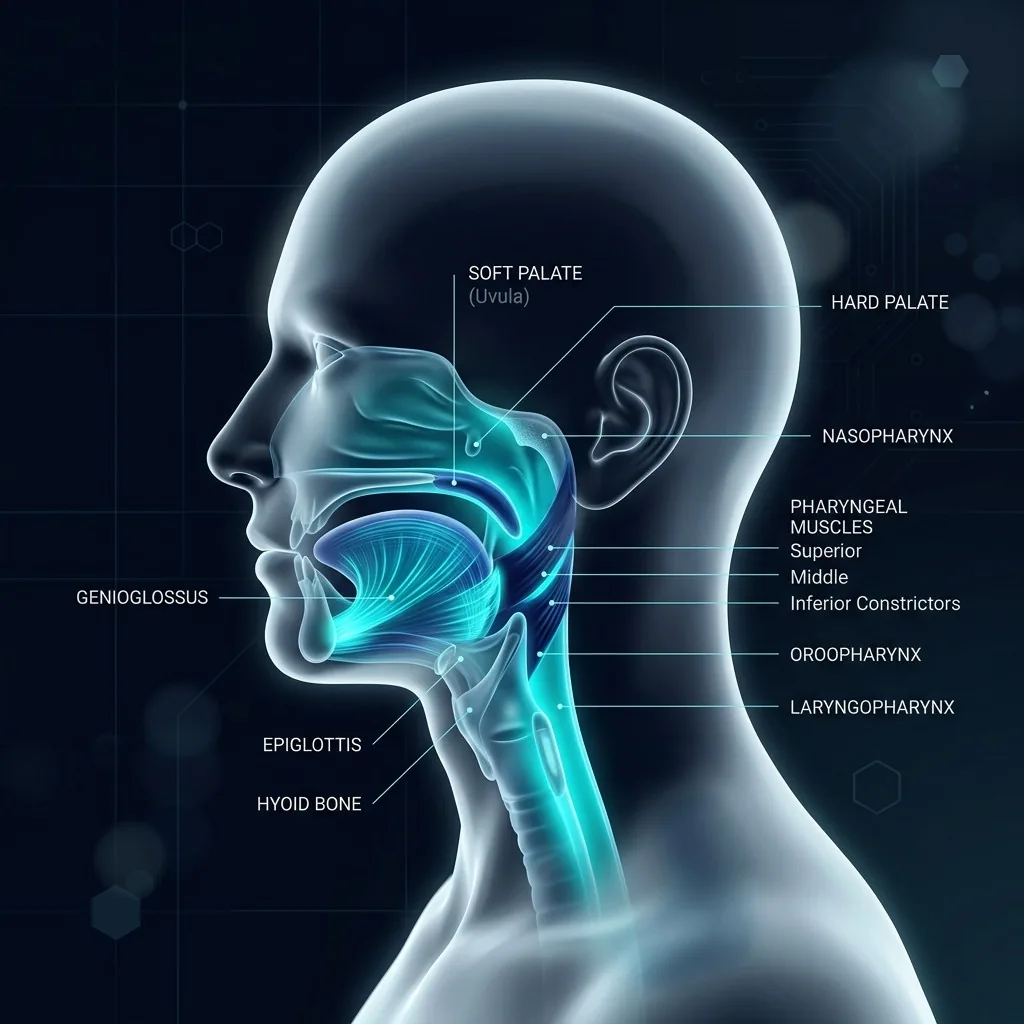
Oropharyngeal and myofunctional programs aim to raise baseline tongue, soft-palate, and throat tone so soft tissue vibrates less and collapses less. Trials support snoring and selected OSA improvements; they do not reverse arterial stiffness by themselves and are not a substitute for medical care.
This page is educational, not a diagnosis or a treatment plan. Cardiovascular risk is multi-factorial. Snoring reduction is one lever among blood pressure care, lipids, weight, diabetes, smoking, and prescribed OSA therapy when indicated.
Expert videos on snoring, sleep apnea, and the heart
Clinician framing and demonstration context only. Clinical claims on this page are grounded in the Sources list, not in video captions.
Mayo Clinic cardiology - obstructive vs central apnea, why REM muscle atonia collapses the airway, and links to hypertension, atrial fibrillation, nocturnal ischemia, and heart failure patterns.
Cleveland Clinic cardiology + sleep medicine - how common OSA is in heart patients, bed-partner interviews, STOP-BANG screening components, and AF-focused collaboration between specialties.
American Heart Association Science (Dr. Sanja Jelic) - underdiagnosed OSA at population scale, multi-fold cardiovascular risk by severity, and human vascular biology pathways beyond animal models.
St. David's HealthCare - patient story of untreated risk, clinician numbers often quoted for heart attack and AF risk, and why "I thought it was just snoring" delays care.
Henry Ford Health ENT (primary snoring framing) - short hospital segment on snoring as a possible earlier cardiovascular signal, including research communication about carotid findings in primary snorers without apnea. Use as awareness context; cite peer-reviewed sources for clinical claims.
When airway exercises still help
Vascular-risk headlines push screening and, when indicated, medical OSA therapy first. Exercises sit in a different lane: they try to reduce the mechanical snoring and collapse load by training tongue, soft palate, and pharyngeal walls.
Randomized trials of oropharyngeal programs reduced snoring metrics (Ieto 2015) and improved OSA outcomes versus sham (Guimaraes 2009). A myofunctional therapy meta-analysis (Camacho 2015) found pooled reductions in snoring and apnea-hypopnea index in selected populations. Those results support a daily airway routine as an adjunct for vibration load - not as a DIY cure for arterial stiffness or atrial fibrillation.
A practical stack for many heavy snorers without red-flag emergencies: STOP-BANG screen, clinician follow-up when scores or symptoms warrant testing, side sleep and alcohol timing to cut easy amplifiers, and a guided tongue/palate/throat routine so soft tissue holds better night after night. Related guides: snoring and airway muscle damage, tongue exercises, soft-palate drills, and oropharyngeal exercise studies.
Airway Trainer turns those drills into a short daily session so reducing snoring burden is not only a device or willpower problem.
When to see a doctor first
Reading a vascular-aging study is not a substitute for care. Get evaluated - do not only download an app - if you have:
- Gasping, choking, or witnessed pauses in breathing
- Severe daytime sleepiness or drowsy driving
- Resistant high blood pressure, AFib, heart failure, or prior stroke/TIA
- Morning headaches, chest pain at night, or new irregular heartbeat symptoms
CPAP, oral appliances, positional therapy, weight management, nasal surgery when indicated, alcohol timing, side sleep, and airway exercises each solve different pieces. Match the tool to the cause after a real assessment when red flags are present.
Sources
- Pinilla L, Sansom K, Letzelter P, et al. npj Digital Medicine. 2026. doi: 10.1038/s41746-026-02469-w.
Flinders University analysis of multi-night home data from 29,653 adults in 20 countries: higher OSA severity and higher snoring burden each associated with higher pulse wave velocity (arterial stiffness), independent of age, sex, and BMI. Heavy snoring without OSA showed PWV patterns comparable to severe OSA with little snoring. - Withings / Flinders press summary. Snoring and sleep apnea accelerate vascular aging. 31 Mar 2026.
Plain-language study brief: multi-year under-mattress snoring/OSA measures paired with smart-scale aortic PWV; single-night snapshots may under-capture night-to-night variability relevant to vascular risk. - Mayo Clinic. Obstructive sleep apnea: Symptoms and causes.
Clinical overview linking OSA with high blood pressure, heart problems, type 2 diabetes, metabolic syndrome, liver problems, and sleep-deprived partners; snoring is a common warning sign, not a harmless joke. - Mayo Clinic. Snoring: Symptoms and causes.
Patient-facing snoring guide: when snoring warrants medical evaluation, lifestyle contributors, and that loud snoring can signal obstructive sleep apnea. - American Heart Association. Sleep Apnea and Heart Disease, Stroke.
AHA patient education: untreated sleep apnea raises risk for high blood pressure, arrhythmia, heart failure, and stroke; screening and treatment matter for heart health. - Ieto V, et al. Chest. 2015 Sep;148(3):683-691. PMID: 25950418.
Randomized trial: oropharyngeal (airway) exercises reduced snoring frequency and snoring power in habitual snorers - a non-device path to lower nightly vibration load. - Guimaraes KC, et al. Am J Respir Crit Care Med. 2009 May 15;179(10):962-968. PMID: 19234106.
Randomized trial: daily upper-airway exercises improved obstructive sleep apnea severity and snoring versus sham control. - Camacho M, et al. Sleep. 2015 May 1;38(5):669-675. PMID: 25348130.
Meta-analysis of myofunctional therapy for OSA: pooled trials show meaningful reductions in snoring and apnea-hypopnea index in selected populations.
Snoring and vascular aging: FAQs
Does snoring cause vascular aging?
A large 2026 real-world study (Pinilla and colleagues, npj Digital Medicine; n=29,653) found higher snoring burden independently associated with higher pulse wave velocity, a marker of arterial stiffness, across OSA severity categories including no OSA. That is an association from multi-night digital monitoring, not proof that every snore hardens arteries the same way. It does support taking heavy snoring seriously as a cardiovascular-relevant signal, especially alongside known OSA risk.
Can snoring be dangerous if I do not have sleep apnea?
Often snoring is the audible part of a spectrum that includes obstructive sleep apnea, so many "just snorers" still need screening. In the Flinders/Withings cohort, people without OSA but with high snoring burden had PWV patterns comparable to severe OSA with little snoring. Older hospital communications (for example Henry Ford ENT coverage of primary-snoring carotid findings) also framed snoring as a possible earlier vascular signal. None of that means panic; it means stop treating nightly roar as purely cosmetic.
What is pulse wave velocity and why does it matter?
Pulse wave velocity (PWV) estimates how fast the pressure wave travels along the arteries. Higher PWV generally means stiffer vessels and is used in research as a marker of vascular aging and cardiovascular risk. The 2026 study paired home snoring/OSA measures with PWV from a connected scale rather than relying on a single clinic blood-pressure reading.
Is sleep apnea worse for the heart than snoring alone?
Clinically, moderate-to-severe untreated OSA has the clearest links to hypertension, atrial fibrillation, heart attack, heart failure, and stroke in patient education from groups such as Mayo Clinic and the American Heart Association. The 2026 data still show a dose-response between OSA severity and PWV, plus an independent snoring-burden signal. Treat OSA when present; do not ignore heavy primary snoring either.
Will CPAP or snoring treatment reverse vascular aging?
Some cardiovascular markers improve when OSA is effectively treated, and AHA-style education emphasizes treatment for heart risk reduction. The Pinilla study is observational on digital monitoring, not a randomized proof that any single snoring gadget reverses PWV. Expect therapy to reduce breathing stress and symptoms; ask your clinician what outcomes are realistic for your case.
Can airway exercises help if I snore and worry about heart risk?
Exercises target upper-airway muscle tone and snoring mechanics. Randomized trials (Ieto 2015, Guimaraes 2009) and a myofunctional therapy meta-analysis (Camacho 2015) support reductions in snoring and, in selected groups, apnea-hypopnea index. They are adjuncts for vibration load and mild-to-moderate phenotypes - not a cure for arterial stiffness, atrial fibrillation, or severe OSA. Screen first when heart red flags are present.
When should I see a doctor about snoring and heart risk?
Seek care for gasping, choking, witnessed apneas, severe sleepiness, morning headaches, resistant high blood pressure, known heart disease, or new nighttime chest symptoms. Bring multi-night snore data if you have it. Quieter nights after side sleep or cutting alcohol are useful experiments, not proof that cardiovascular risk is gone.
Quieter nights are heart-relevant work, not vanity
Screening and medical care come first when apnea or heart disease is in play. Airway Trainer handles the daily tongue, palate, and throat work that lowers snoring vibration load - the piece a single study headline cannot train for you.
Related reading: Snoring damages airway muscles · Alcohol and snoring · How to track snoring