What your snoring sound reveals about the airway
Around 50% of adults snore, but not every snore sounds the same — and clinicians actually use the sound to localize the problem. This guide pulls together the clinical VOTE classification (Velum, Oropharynx, Tongue, Epiglottis), the 1–3 severity grading system, the frequency cues from the snore power spectrum, and the one pattern an NYU Langone ENT calls the real warning sign.
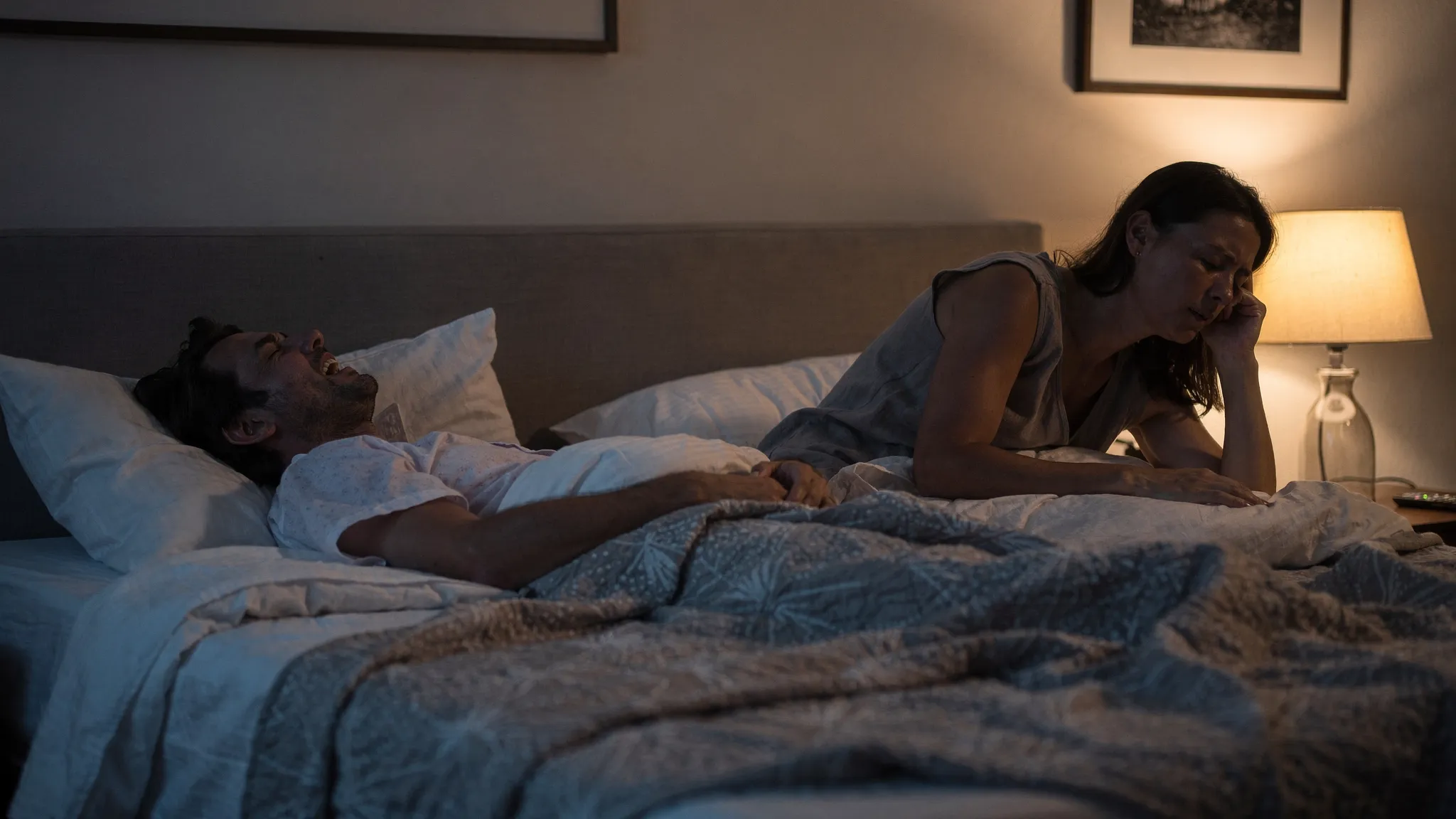
Quick answer
Snoring happens when sleep breathing becomes turbulent enough to make relaxed tissue vibrate. The exact sound depends on where airflow is narrowing, whether the mouth or nose is doing most of the breathing, sleep position, alcohol, congestion, fatigue, and whether breathing is only noisy or repeatedly obstructed.
Use sound as a starting clue, not a diagnosis. Phone recordings cannot measure oxygen levels, brain arousals, breathing effort, or the number of breathing interruptions per hour. A sleep test is the right path when symptoms point beyond simple snoring.
How common is snoring, really?
~50%
of adults snore at least occasionally
40%
of adult men snore habitually
20%
of adult women snore habitually
40–98.6%
AI accuracy range for snore-source classification (2026 systematic review)
Snoring isn't rare or unusual — it's the most common breathing sound of adult sleep. The signal worth listening for is not whether snoring exists, but what kind of snoring it is.
The VOTE classification: where the snore is actually coming from
When a sleep doctor performs drug-induced sleep endoscopy (DISE), they label the vibration source using one acronym: VOTE. It's also the target every recent AI snore-classification paper trains toward (Tartaglia 2026; Sun 2021).
Velum (soft palate)
Sound: Low-frequency, fluttering / buzzy
The flexible tissue at the back of the roof of the mouth. Most adult snores ride on velum vibration — about 484 of 828 snore episodes in the Munich-Passau Snore Sound Corpus (the dataset used to train VOTE-classification AI models).
Oropharynx (lateral throat walls + tonsils)
Sound: Mid-frequency, throaty — sometimes very loud
The side walls of the throat and tonsils collapsing inward. Often shows up in heavier snorers and people with enlarged tonsils. ENT surgeon Vik Veer (London) flags a tell that other guides skip: the harsh, almost rock-band scream that some snorers produce — the kind that wakes neighbors through two brick walls — is sidewall rubbing, the same vibration heavy-metal vocalists train on purpose. If a partner has ever said the snore sounds like a death growl, the O is doing the work.
Tongue base
Sound: High-frequency, deeper rumble; worse on the back
The back of the tongue falling toward the airway. Strongly position-dependent — snoring noticeably worse supine is a classic tongue-base signal. Linked with higher OSA risk.
Epiglottis
Sound: Irregular, choking / fluttering at the base of the throat
The leaf-shaped flap at the top of the larynx. Less common but clinically important — surgical planning often hinges on whether the epiglottis is involved.
These aren't clean categories — a person can have V + T involvement in the same night, and nasal contributors layer on top. But knowing which letters are in play is what changes the treatment plan: V responds to palate exercises and surgery, T responds to positional therapy and tongue training, E often needs surgical evaluation.
Snoring grades 1-3: how severe is what you're hearing?
Beyond “where” the snore is coming from, clinicians grade “how severe” it is. The Grade 1-3 scale is a fast triage shortcut.
Simple snoring
Occasional, light, rhythmic snoring. Breathing stays normal. Mainly a bed-partner issue, not a health one.
Habitual snoring
Snoring on 3+ nights a week, mild-to-moderate breathing disruption, often with daytime fatigue. Worth a clinical conversation.
Severe snoring
Loud enough to be heard outside the bedroom, often with obstructive sleep apnea. Brain repeatedly pulled out of deep sleep. Needs evaluation — not next month, soon.
The pitch of your snore is a real clue
Power-spectrum analysis of recorded snores shows a consistent pattern: simple palatal snores cluster low, OSA-pattern snores carry more high-frequency energy. This is why an apparently “louder” snore isn't always the more serious one — pitch matters as much as volume.
| Frequency band | Snore type | What it suggests |
|---|---|---|
| 100–300 Hz | Simple, palatal snoring | Soft-palate vibration. Common, usually benign on its own. |
| Mid frequencies | Epiglottic involvement | Suggests vibration deeper in the airway, near the larynx. |
| Above 1,000 Hz | OSA-pattern snoring | Higher-frequency content correlates with tongue-base or tonsillar obstruction and a higher OSA likelihood. |
Common snoring sounds and what they may reveal
Use this as a practical guide, not a diagnostic tool. Loud, new, worsening, or symptom-heavy snoring deserves a healthcare conversation.
| Sound or pattern | What it may suggest | Practical next step |
|---|---|---|
| Low, steady rumble | Soft palate, tongue base, or throat vibration | Track whether it worsens on the back, after alcohol, or when overtired. |
| Fluttering or flapping | Soft palate or uvula vibration | Consider airway muscle training and reduce evening alcohol. |
| High-pitched whistle | Nasal narrowing, congestion, or tight nasal airflow | Address allergies, congestion, or nasal obstruction if it persists. |
| Harsh mouth-open snoring | Mouth breathing, nasal blockage, low tongue posture, or poor lip seal | Note nasal symptoms and practice nasal breathing habits when awake. |
| Much worse on the back | Tongue and soft tissue falling backward during sleep | Try side-sleeping strategies and evaluate throat muscle tone. |
| Silence, then snorting or gasping | Possible repeated airway obstruction | Seek medical evaluation for sleep apnea risk. |
| Irregular snoring with restless sleep | Fragmented breathing or sleep disruption | Look for daytime fatigue, morning headaches, and witnessed pauses. |
What the main sounds often mean
A deep, rumbling sound often feels like it comes from the throat. It may grow louder during deep sleep, after alcohol, when someone is very tired, or when they sleep on their back.
A fluttering, flapping, or vibrating snore often suggests soft-palate or uvula movement. It may be more noticeable when nasal breathing is limited and the mouth opens more often.
A whistling sound is often associated with airflow through a narrowed nasal passage. If it is persistent, one-sided, or paired with chronic nasal obstruction, an ENT or clinician can help identify the cause.
What an ENT specialist actually listens for
“Snoring really does not demonstrate anything good. You can have beautifully deep sleep in a silent sleep. The pattern to watch for is a crescendo where the snoring gets louder and louder, then periods of no sound, then a gasp that sounds like a snort.”
Erich Voigt, MD
ENT and sleep specialist, NYU Langone Health
Snorting, choking, or gasping is the pattern to take seriously
The most important pattern is not the loudest sound. It is silence followed by a snort, choke, or gasp. This can happen when airflow is reduced or briefly blocked, then breathing resumes with effort.
Do not ignore this pattern if it happens repeatedly. Also watch for daytime sleepiness, morning headaches, high blood pressure, waking with a dry mouth, trouble concentrating, or drowsy driving.
Those daytime symptoms are more than just tiredness. Each gasp or micro-arousal pulls the brain out of the deep and REM stages that lock in the day's learning, which is why broken sleep patterns can damage memory as much as outright sleep loss — even when total time in bed looks normal.
Why one night of audio can mislead you
Snoring changes from night to night. A recording after a late dinner and two drinks can sound very different from a normal evening. Allergies, phone position, fatigue, and sleep posture can all exaggerate or soften the result.
A better snoring log looks for patterns across several nights. Recordings are useful if a partner is unsure about pauses or gasps, but the goal is to connect sound with context.
- Sleep position: back, side, or stomach
- Alcohol use or sedating medication that evening
- Nasal congestion, allergies, or illness
- Bedtime, sleep duration, and unusual fatigue
- Dry mouth, morning headache, or daytime sleepiness
- Whether a partner noticed pauses, choking, or restless movement
What to do when the sound suggests airway vibration
Once medical red flags are addressed, start with habits that reduce airway narrowing: side sleeping if back sleeping worsens snoring, less alcohol near bedtime, congestion management, and a consistent sleep schedule.
For soft-palate, tongue, or throat vibration, oropharyngeal and myofunctional exercises may be useful. They target the tongue, soft palate, lips, cheeks, and throat to improve strength, posture, and coordination in the muscles that influence airway stability.
How Airway Trainer fits in
Airway Trainer turns clinically backed oropharyngeal-style exercises into a guided daily routine. Sessions are designed to take about five minutes a day, with onboarding, progress tracking, and structured protocols for tongue, soft-palate, and throat training.


Frequently asked questions
Can you tell the cause of snoring by sound alone?
You can get a strong clue, but not a diagnosis. Sleep clinicians and AI tools use the VOTE classification (Velum, Oropharynx, Tongue, Epiglottis) to localize where the airway vibrates from the snore sound. Acoustic features alone cannot measure oxygen, brain arousals, or apnea events — that’s what a sleep study is for.
What is VOTE classification?
VOTE is the clinical framework for locating the vibration source of a snore: V (velum / soft palate), O (oropharynx / lateral throat walls and tonsils), T (tongue base), and E (epiglottis). It was originally derived from drug-induced sleep endoscopy (DISE) and is now the standard target for AI-based snore-source classification.
What does a high-pitched snoring sound usually mean?
High-frequency snore content (above ~1,000 Hz) is associated with tongue-base or oropharyngeal obstruction and a higher OSA likelihood, while low-frequency snores (100–300 Hz) typically point to soft-palate vibration. A whistling tone often means narrowed nasal airflow rather than throat vibration.
Is gasping after snoring a warning sign?
Yes. The pattern Dr. Erich Voigt (NYU Langone) calls out is a crescendo of louder snoring, then silence, then a gasp or snort. That sequence is a strong indicator of obstructive sleep apnea, especially alongside daytime sleepiness, morning headaches, witnessed pauses, or high blood pressure.
What are the snoring grades?
Grade 1 (simple snoring): occasional, light, no breathing disruption. Grade 2 (habitual): 3+ nights a week, mild-moderate breathing disruption, often daytime fatigue. Grade 3 (severe): loud enough to be heard outside the bedroom, frequently with obstructive sleep apnea.
What percentage of people snore?
About 50% of adults snore at least occasionally. Habitual snoring affects roughly 40% of adult men and 20% of adult women, with men generally snoring louder and more often.
Can a phone app actually tell where my snoring is coming from?
Sort of. A 2026 systematic review of AI snoring-sound analysis (Tartaglia et al., Otolaryngology–Head and Neck Surgery) reports VOTE-classification accuracy from ~50% on baseline pipelines up to ~94% with targeted features. Consumer apps usually report intensity (decibels and frequency of snore events), not the obstruction site.
Can exercises change the sound of snoring?
They may. Tongue, soft-palate, and throat exercises can improve airway muscle tone — randomized trials (Ieto 2015) show meaningful drops in snoring frequency and loudness after about 3 months of consistent practice. They tend to help most when the source is V (velum) or T (tongue base).
How many nights should I record my snoring before judging the pattern?
One night can be misleading — alcohol, congestion, fatigue, and posture all skew the result. Aim for 5–7 nights with notes on position, alcohol, congestion, and sleep quality before drawing conclusions, and skip straight to a clinician if you see crescendo-silence-gasp patterns.
Why does my partner say my snore sounds like a death growl?
That is almost always the O in VOTE — the oropharynx, the side walls of the throat collapsing inward and rubbing together. London ENT surgeon Vik Veer notes that this same vibration pattern is what some heavy-metal vocalists train on purpose for screaming-style vocals; it is also why a small subset of snorers carry through brick walls. It is the sound to take to a sleep clinic, especially if it is paired with daytime sleepiness or witnessed pauses.
Selected references
- Tartaglia FC, et al. Otolaryngology–Head and Neck Surgery. 2026;174(2):317-333.
AI in snoring-sound analysis: OSA detection and VOTE obstruction-site classification (systematic review). - Sun J, et al. J Clin Sleep Med. 2021;17(5):1031-1038.
Automatic classification of excitation location of snoring sounds across the V-O-T-E sites. - Thomas L. News-Medical, 2019.
Snoring grades 1-3 and snore power-spectrum classification (100-300 Hz vs >1,000 Hz). - Aubrey A. NPR Morning Edition, 2019.
Erich Voigt, MD (NYU Langone) on the crescendo-silence-gasp pattern of OSA snoring. - Mayo Clinic.
Snoring symptoms and causes. - National Heart, Lung, and Blood Institute.
Sleep apnea overview. - Ieto V, et al. Chest. 2015 Sep;148(3):683-691.
Oropharyngeal exercises reduced snoring frequency and intensity. - Veer V. ENT Surgeon, London. YouTube clinical walkthrough.
Endoscopic observation that sidewall vibration produces the loudest snores — the same mechanism behind heavy-metal screaming vocals.
Turn a noisy clue into a healthier sleep habit
If you want guided, non-device airway training, Airway Trainer offers personalized five-minute daily routines for tongue, throat, and soft-palate training.
Medical disclaimer: this article is educational and does not replace medical advice. Loud snoring with gasping, choking, witnessed pauses, or significant daytime sleepiness should be evaluated by a qualified clinician.