Why airway has become a central conversation in modern orthodontics
How jaw growth, oral posture, nasal airflow, sleep-disordered breathing, and team-based care now fit into a thoughtful orthodontic evaluation.
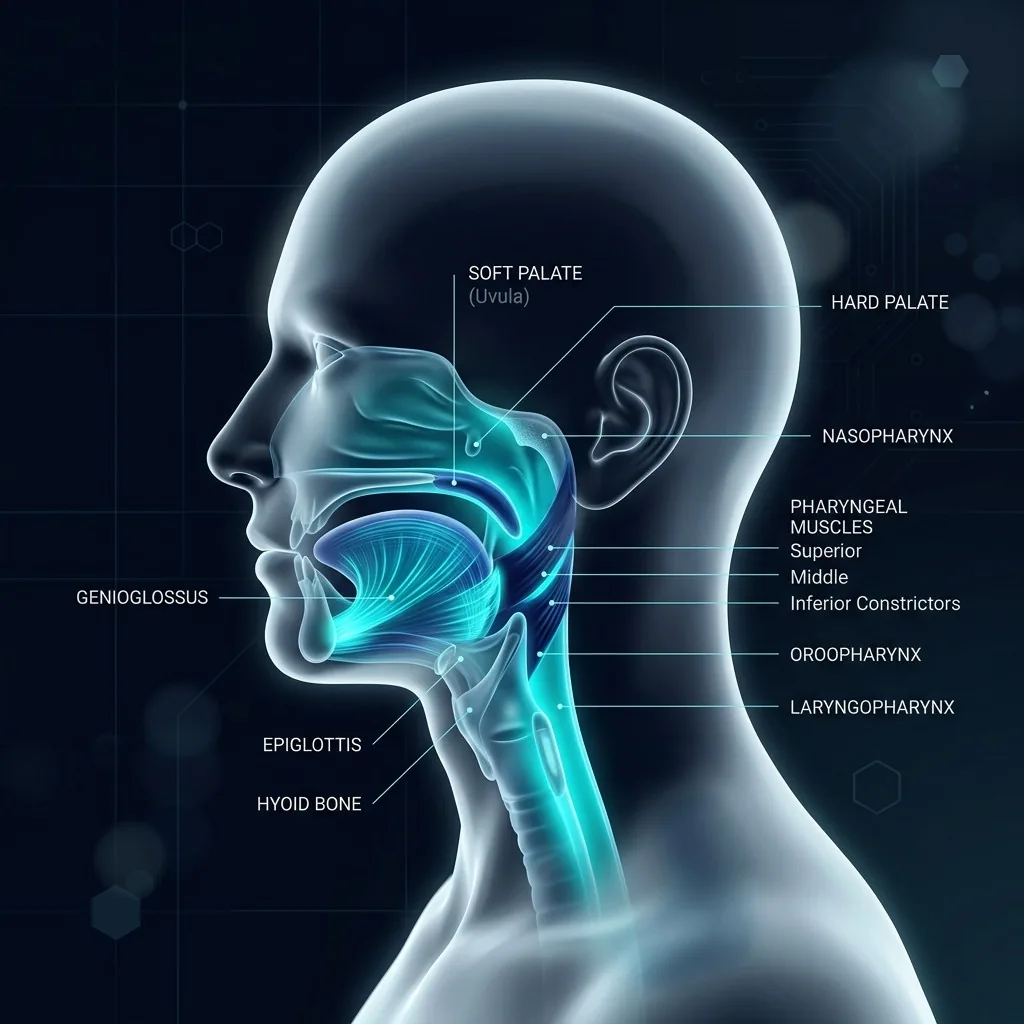
Quick context
This article is educational and does not replace evaluation by a physician, orthodontist, dentist, ENT, allergist, or speech and language pathologist.
For most of its history, orthodontics has been associated with straight teeth and a confident smile. That is still true, and patients are right to value both. What has changed is the breadth of what an orthodontic evaluation now looks at. Jaw growth, bite, oral posture, and the airway are all part of the same developmental story, and the field has steadily moved toward treating them as such.
This shift reflects a growing body of evidence connecting craniofacial structure to nasal airflow, sleep quality, and broader medical health. It also reflects something practical: orthodontists see children during a key window of facial growth, and they see adults across a wide range of ages, often before a sleep physician or ENT specialist is involved. They are frequently the first clinical eyes on patterns that may, eventually, deserve a closer look.
The point of this article is not to claim that orthodontics can solve airway problems on its own. It cannot. The point is to explain why airway evaluation belongs in modern orthodontic practice, what it should actually involve, and how it fits into a wider team approach to breathing health.
The Scope of the Problem
To understand why airway has become a serious topic in orthodontics, it helps to look at how common breathing related sleep disorders actually are. A 2019 analysis published in The Lancet Respiratory Medicine30198-5/abstract) estimated that 936 million adults globally between the ages of 30 and 69 have mild to severe obstructive sleep apnea, with about 425 million in the moderate to severe range. That makes it one of the most prevalent chronic conditions in adults worldwide, and it remains substantially underdiagnosed.
In children, the picture is different but still significant. The American Academy of Pediatrics recommends that pediatricians screen for snoring at routine visits, and that diagnostic evaluation be considered when snoring appears alongside other symptoms or signs of obstructive sleep apnea. Untreated pediatric sleep disordered breathing has been linked to effects on behavior, learning, growth, and cardiovascular function.
These numbers are not meant to alarm. Most people who snore do not have sleep apnea, and most children who sometimes breathe through the mouth are not in medical distress. The numbers do, however, explain why every healthcare provider who works in or near the airway, including orthodontists, has a reason to pay attention.
What "Airway Focused Orthodontics" Actually Means
The phrase "airway focused orthodontics" is used in many ways, some more responsible than others. At its best, it describes a clinical approach that:
- Screens patients for airway risk factors during routine orthodontic evaluation
- Considers the airway implications of orthodontic treatment plans
- Coordinates with physicians and other professionals when concerns arise
- Avoids overstating what orthodontics can do on its own
The American Association of Orthodontists white paper on obstructive sleep apnea and orthodontics30278-1/abstract), first published in 2019 and updated in 2026, sets the professional standard for this approach. The white paper is clear on the core boundary: orthodontists should screen patients for OSA risk factors, but the definitive diagnosis of obstructive sleep apnea must be made by a qualified physician, typically based on a sleep study. The white paper also encourages collaboration between orthodontists, sleep physicians, ENTs, and dentists trained in dental sleep medicine.
In short, a thoughtful orthodontist asks the right questions, notices the right signs, and refers when warranted. They do not promise to cure sleep disorders with appliances alone.
Why the Orthodontist Is Often the First Set of Eyes
By the nature of their training and the timing of their patients' visits, orthodontists are well positioned to notice structural and developmental signs that may relate to breathing. A routine orthodontic evaluation includes review of:
- Upper and lower jaw width and length
- Dental arch shape
- Bite relationships
- Tongue posture and lip seal at rest
- Mouth breathing patterns
- Tonsil size on visual inspection
- Patterns of facial growth
None of these observations alone confirm an airway problem. Taken together with the patient's history, they can prompt a useful conversation, and sometimes a referral. For pediatric patients, the American Association of Orthodontists recommends an initial orthodontic evaluation by age 7, when many of these patterns can be identified while growth is still active. Practices that take this checkpoint seriously, such as BirchTree Orthodontics in Fremont and Newark, California, explain the rationale in their guidance on early orthodontic evaluation and use it as an opportunity to discuss not only crowding and bite, but also breathing and oral posture.
The Evidence on Maxillary Expansion and Airway
One of the most studied connections between orthodontics and the airway concerns the upper jaw. The maxilla forms part of the floor of the nasal cavity, so its width and shape influence nasal airflow as well as tongue space. A narrow upper jaw, sometimes paired with a high arched palate, is associated with a craniofacial pattern that has also been observed in some patients with obstructive sleep apnea.
Several systematic reviews have examined whether rapid maxillary expansion improves sleep related breathing outcomes in children. A 2017 meta analysis by Camacho and colleagues, published in The Laryngoscope, found that rapid maxillary expansion can reduce the apnea hypopnea index in selected pediatric patients, although the evidence base is limited and patient selection matters. A more recent systematic review published in 2025 concluded that rapid maxillary expansion consistently increases nasal cavity volume and upper airway dimensions in growing children, with positive effects on nasal respiration.
The evidence is encouraging, but it should be read carefully. Maxillary expansion is not a treatment for sleep apnea in the way CPAP is. It is an orthodontic treatment that may, in suitable patients, improve nasal breathing and create more favorable conditions for the airway. When tonsils, adenoids, allergies, or other medical factors are also contributing to obstruction, expansion will not resolve those.
For families who want to understand what early growth guidance actually looks like in practice, BirchTree's guide on children and braces walks through how interceptive treatment, including expansion when indicated, fits into a broader plan rather than acting as a single fix.
Where Oral Appliances Fit for Adults
For adult patients, orthodontic and dental sleep medicine connect most clearly through oral appliance therapy, sometimes called mandibular advancement therapy. The joint clinical practice guideline from the American Academy of Sleep Medicine and the American Academy of Dental Sleep Medicine recommends oral appliance therapy for adults with obstructive sleep apnea who are intolerant of CPAP or who prefer an alternative, and for adults with primary snoring.
These appliances work by holding the lower jaw slightly forward during sleep, which helps maintain space behind the tongue and reduces airway collapse. They are prescribed after a physician diagnoses the sleep disorder and are fitted by a qualified dentist, often one with additional training in dental sleep medicine. Orthodontists, particularly those who collaborate with sleep physicians, can play a useful role in structural assessment and appliance considerations.
It is worth restating the white paper's caution: orthodontists should not act as primary diagnosing providers for sleep apnea. The diagnosis belongs to a sleep physician. The orthodontist's contribution lies in screening, structural assessment, treatment planning, and, when indicated, the fabrication or coordination of an oral appliance after diagnosis.
Adult Orthodontics and Airway Awareness
A growing number of adults pursue orthodontic treatment for cosmetic, functional, or restorative reasons. Many of these patients also present with patterns that warrant airway awareness: a narrow upper arch, a retruded lower jaw, a deep overbite, or a tongue that habitually rests low in the mouth.
For these adults, an orthodontic plan is not only about aligning teeth. It can include conversations about:
- Whether a sleep evaluation should be pursued before, during, or independently of orthodontic care
- How tooth movement and jaw position might interact with the airway
- Whether a skeletal expansion option suited to adults is appropriate, in coordination with the surgical or specialist team
- How retention plans should be designed when oral muscle habits are a factor in stability
Adults exploring clear aligners or other modern treatment paths can review the practical overview on BirchTree's Invisalign information page, which describes how clear aligner therapy works, what it can and cannot do, and how it compares with traditional approaches.
How Orthodontists Evaluate the Airway
Orthodontic airway evaluation is a screening exercise, not a diagnosis. The components typically include:
A careful history of snoring, restless sleep, daytime tiredness, allergies, nasal congestion, asthma, and family history of sleep apnea. Validated screening questionnaires for adults, and developmentally appropriate sleep questionnaires for children, are often used to make this systematic.
A clinical examination that looks at the face and profile, the size and position of the tongue, lip competence at rest, palate shape, dental arch width, the position of the lower jaw, and an estimate of tonsil size where visible.
Imaging, often including a panoramic radiograph and a lateral cephalogram. Cone beam computed tomography is sometimes used in specific cases. Imaging can reveal structural patterns associated with airway risk, but the AAO white paper is explicit that imaging alone does not diagnose obstructive sleep apnea. Polysomnography remains the medical reference standard.
When findings warrant it, the orthodontist refers to a physician, an ENT specialist, an allergist, or a sleep medicine provider. That referral, on its own, can be one of the more valuable outcomes of an orthodontic visit.
Why Function Matters as Much as Structure
Orthodontic treatment changes structure. Long term success depends on function. The lips need to seal at rest. The tongue needs to sit against the palate. The swallow should happen without the tongue pushing forward against the teeth. Nasal breathing should be the default.
When these functional patterns are healthy, orthodontic results tend to be stable, oral hygiene tends to be easier, and conditions for healthy breathing are supported. When they are not, results can drift, and the breathing patterns that may have contributed to the original problem can persist.
This is where myofunctional therapy enters the picture. Myofunctional therapy focuses on the muscles and habits of the lips, tongue, cheeks, soft palate, and throat. A systematic review and meta analysis by Camacho and colleagues, published in 2015, reported reductions in the apnea hypopnea index after myofunctional therapy in both adult and pediatric populations, supporting it as an adjunct rather than a replacement for medical treatment. A Cochrane review on myofunctional therapy concluded that there may be improvements in some short term outcomes, with evidence certainty that varies across studies.
For patients who are advised that myofunctional therapy may help, the practical question is not whether the exercises work in theory. It is whether they get done consistently at home.
When Myofunctional Therapy Needs a Surgeon's Help
Myofunctional therapists also flag a structural issue that orthodontists are well placed to coordinate on: the lingual frenulum. A short or tight frenulum can prevent the tongue from protruding straight forward, which both limits the exercises themselves and reinforces a low tongue posture during growth. London ENT surgeon Vik Veer notes in a clinical walkthrough that experienced myofunctional therapists routinely refer patients to surgeons for a frenectomy once it becomes clear that the tongue cannot move the way the drills require. That referral pathway - myofunctional therapist, orthodontist, ENT or oral surgeon - is one of the cleaner examples of the team approach in practice. It belongs in the screening conversation, not at the end of a failed therapy program.
The Role of Consistent Home Practice
Any clinician who has worked with myofunctional therapy knows the bottleneck is adherence. Office sessions teach the right movements. The rest of the patient's week happens at home, where reminders fade, schedules shift, and even motivated patients lose track of which exercises to do on which day. A photocopied handout rarely survives this.
This is one reason patients and providers are increasingly turning to guided exercise platforms that build airway and oral muscle training into a daily routine. AirwayTrainer, the host of this article, was built for that gap. Its myofunctional therapy at home program combines video instruction, timed sessions, and structured progression so patients have a clear path to follow between professional appointments.
AirwayTrainer is a wellness and exercise tool. It is not a diagnostic device, and it does not replace evaluation by a sleep physician, orthodontist, ENT, allergist, or speech and language pathologist. What it can do is help patients stay consistent with the kind of small daily practice that supports oral function over time.
A Team Approach Is the Modern Standard
Perhaps the most important shift in airway focused orthodontics is the recognition that no single provider owns the airway. A child with mouth breathing may need an ENT for tonsils, an allergist for chronic rhinitis, an orthodontist for a narrow upper jaw, a myofunctional therapist for tongue posture, and a pediatrician to coordinate. An adult with suspected sleep apnea may need a sleep physician for diagnosis, a dentist trained in dental sleep medicine for an oral appliance, and an orthodontist for structural considerations and tooth movement.
Good orthodontic practices are open about this. BirchTree Orthodontics, for example, addresses many airway related questions in its frequently asked questions resource, taking a measured stance on what orthodontics can and cannot offer and when other specialists need to be involved.
The takeaway for patients is simple. If a single provider claims to handle every aspect of a sleep or airway concern on their own, that is a flag. Coordinated, evidence informed care is the modern standard.
What Patients Can Do Now
For families and adult patients trying to navigate this space, a few practical steps usually apply.
If a child is approaching age 7, or already showing signs of mouth breathing, snoring, restless sleep, a narrow upper arch, or crowded teeth, schedule an orthodontic evaluation. Bring up the breathing concerns directly. The orthodontic visit is a screening visit, and it pairs well with conversations with the pediatrician.
If an adult snores loudly, wakes unrefreshed, experiences daytime sleepiness, or has been told they pause breathing during sleep, speak with a primary care physician or a sleep medicine specialist. Diagnosis comes first. Orthodontic and dental sleep options are part of the conversation, not the starting point.
If structural, dental, or functional treatment is recommended, ask how it fits with the rest of a patient's care. A reasonable orthodontist, such as the team at BirchTree Orthodontics led by board certified orthodontist Dr. Manu Sharma, will be willing to explain the reasoning, share the evidence, and coordinate with other clinicians.
If oral muscle exercises are part of the plan, set up a system that supports daily practice. Structured platforms such as AirwayTrainer exist precisely to make that easier, and they pair well with the kind of careful, individualized orthodontic care described here.
Bottom Line
Airway has earned its place in modern orthodontic conversations. The reasons are clear: jaw structure shapes nasal airflow, oral habits influence breathing patterns, and orthodontists see patients during windows of growth and life when both can be assessed and, in many cases, guided.
What has also become clear is that responsible airway focused orthodontics is not about big promises. It is about careful screening, thoughtful treatment, appropriate referrals, and steady support for the daily oral function habits that help structural change last.
For patients in the Bay Area and beyond, the most useful first step is often the simplest one: an honest evaluation from a board certified orthodontist, an honest conversation with a physician where indicated, and a daily practice that keeps the tongue, lips, palate, and throat working well between visits.
Support the daily practice between visits
Airway Trainer turns oral and airway muscle exercises into guided sessions with timers, progression, and structure for consistent home practice.